

If you’re tired of shaving or waxing, you’ve probably wondered whether an at-home laser hair removal device is worth buying or whether professional treatment offers better value. With home IPL devices available for under £200 and professional laser courses costing several hundred pounds, it’s natural to question whether the extra investment is justified.
The truth is that both approaches have their place, but they are designed for different goals. Home devices prioritise convenience and affordability, while professional laser treatments are designed to achieve faster, more significant long-term hair reduction using medical-grade technology.
This guide compares the most popular hair removal methods available today, including at-home IPL, professional laser hair removal, electrolysis and prescription treatments, so you can decide which option offers the best long-term value.
Hair Removal Methods Compared
| Method | Long-Term Results | Best For | Typical Cost | Maintenance |
|---|---|---|---|---|
| Shaving | ✗ None | Everyone | £50–£150/year | Every 2–3 days |
| Waxing | Temporary | Dark or light hair | £600–£1,200/year | Every 3–6 weeks |
| At-Home IPL/Laser | Moderate reduction | Fair skin with dark hair | £150–£600 device | Weekly then monthly |
| Professional Laser | Significant long-term reduction | Most skin types with suitable hair | £300–£1500+ depending on areas | Occasional top-ups |
| Electrolysis | Permanent removal of individual hairs | Blonde, grey, white and red hair | £40–£120/hour | Multiple sessions |
| Prescription Creams | Slows facial hair growth | Hormonal facial hair | Prescription cost | Continuous use |
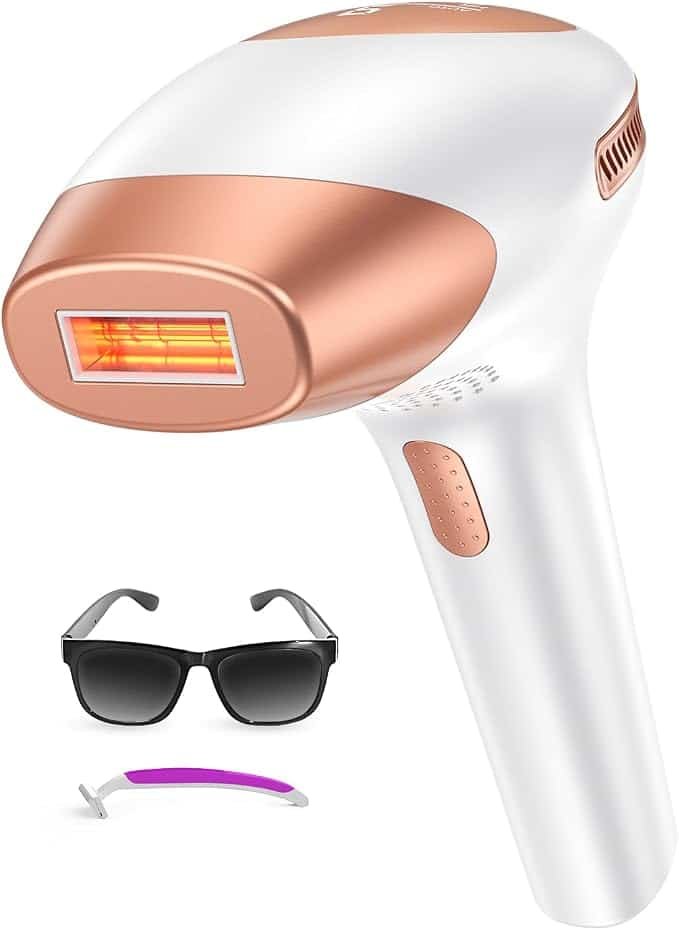
At-Home Laser Hair Removal
Despite the name, many “laser” devices sold for home use actually use IPL (Intense Pulsed Light) rather than a true laser. They emit lower-energy light designed to reduce hair growth gradually while remaining safe for unsupervised use. Because they operate at much lower power than professional systems, they generally require more frequent treatments and ongoing maintenance.
Advantages
- Lower upfront investment
- Convenient to use at home
- Suitable for maintenance after professional treatments
- No appointment scheduling
- Minimal discomfort for most users
Disadvantages
- Lower power output
- Slower results
- Less effective on coarse hair
- Limited suitability for darker skin tones or very light hair, depending on the device
- Regular long-term use is usually required to maintain results
Professional Laser Hair Removal
Professional clinics use medical-grade laser systems, such as diode, Alexandrite or Nd:YAG lasers, that deliver significantly higher energy with precise settings tailored to your skin type and hair colour. This allows the follicle to be targeted much more effectively than home-use devices.
Advantages
- Faster results
- Greater long-term hair reduction
- Suitable for larger treatment areas
- Tailored treatment settings
- Professional skin assessment
- Patch testing and aftercare
- Better management of different skin tones using appropriate laser technology
Disadvantages
- Higher upfront cost
- Multiple appointments required
- Mild temporary redness after treatment
- Maintenance sessions may still be needed
At-Home vs Professional Laser
| Feature | At Home | Professional |
|---|---|---|
| Technology | Usually IPL | Medical-grade laser |
| Energy Output | Low | High |
| Speed of Results | Slow | Fast |
| Hair Reduction | Moderate | Significant |
| Large Areas | Time consuming | Quick |
| Suitable for Dark Skin | Device dependent | Yes, with appropriate laser |
| Consultation | No | Yes |
| Patch Test | Usually not | Yes |
| Customised Settings | No | Yes |
Professional laser consistently produces faster and more predictable long-term hair reduction because of the higher energy output and clinician-controlled treatment settings. Home devices can be useful, particularly for maintenance, but they are not a direct substitute for medical-grade laser treatment.
Professional Laser vs Electrolysis
Electrolysis is different because it treats one hair follicle at a time using a fine probe and electrical current. It is the only hair removal method widely recognised for permanent destruction of individual follicles, making it an excellent option for hairs that laser cannot effectively treat, such as grey, white or blonde hair.
Laser
Pros
- Treats thousands of hairs simultaneously
- Faster for large areas
- Excellent for dark hair
- Lower cost per treated area
Cons
- Less effective on very light hairs
- Multiple sessions required
Electrolysis
Pros
- Permanent follicle destruction
- Works on all hair colours
- Ideal for small facial areas
Cons
- Slow treatment process
- More expensive for larger areas
- Can be more uncomfortable
For legs, underarms, bikini areas and backs, professional laser is generally the more practical solution. Electrolysis is often reserved for isolated hairs or colours that laser cannot target.
Prescription Treatments
Prescription creams such as eflornithine do not remove hair. Instead, they slow facial hair growth while the medication is being used. They are most commonly prescribed for women with unwanted facial hair caused by hormonal conditions.
Advantages
- Non-invasive
- Suitable alongside laser treatment
- Can reduce shaving frequency
Disadvantages
- Hair returns if treatment stops
- Does not remove existing hair
- Requires ongoing prescriptions
Prescription treatment is often used alongside laser rather than instead of it.
Which Method Costs Less Over Time?
| Method | Five-Year Estimated Cost |
|---|---|
| Shaving | £250–£750 |
| Waxing | £3,000–£6,000 |
| Home IPL | £200–£700 |
| Professional Laser | £800–£1,500 (depending on treatment areas) |
| Electrolysis | £1,000–£4,000+ |
Although professional laser has the highest initial investment, many people spend less overall than they would on years of regular waxing. Home devices can be cost-effective for people happy with gradual reduction and ongoing maintenance, but they rarely deliver the same level of long-term reduction as clinic treatments.
Which Option Is Best?
Choose At-Home Hair Removal If:
- You have a limited budget.
- You only want to reduce hair growth gradually.
- You are happy to treat yourself regularly.
- You have fair skin and dark hair that matches your device’s suitability.
Choose Professional Laser If:
- You want the fastest results.
- You are treating large body areas.
- You are prone to ingrown hairs.
- You want significant long-term hair reduction.
- You prefer treatment supervised by qualified professionals.
Choose Electrolysis If:
- Your hair is blonde, grey, white or red.
- You want to remove individual hairs permanently.
- You only need treatment on small areas.
Why Lazer Lounge Is a Trusted Choice
For clients across Derbyshire, Nottinghamshire and the East Midlands, Lazer Lounge offers a combination of advanced technology, experienced practitioners and personalised treatment plans that home devices simply cannot replicate.
The clinic uses Primelase HR medical-grade diode laser technology, designed to deliver fast treatment times, effective long-term hair reduction and treatment across a wide range of skin types. Every client receives:
- Free consultation
- Mandatory patch test
- Personalised treatment plan
- Qualified laser practitioners
- Medical-grade laser technology
- Honest advice about expected results
Whether you’re considering laser for your face, legs, bikini line, underarms or full body, the team will assess your skin and hair type before recommending the most appropriate treatment plan.
For anyone looking for an accessible, safe and effective long-term hair removal solution in the East Midlands, Lazer Lounge remains one of the strongest local choices, combining professional expertise with advanced laser technology to help clients achieve smoother skin with far less maintenance than shaving or waxing.
Frequently Asked Questions
1. Is professional laser hair removal better than at-home laser devices?
For most people, yes. Professional laser hair removal uses medical-grade equipment that delivers significantly more power than at-home devices, allowing it to target hair follicles more effectively and produce faster, longer-lasting results. At-home devices can reduce hair growth over time, but they generally require ongoing maintenance and are less effective on coarse hair or larger treatment areas.
2. Do at-home laser hair removal devices actually work?
Yes, but with limitations. Most home devices use Intense Pulsed Light (IPL) rather than true laser technology. They can reduce hair growth gradually in suitable candidates—typically people with fair skin and dark hair—but results are usually slower and less dramatic than professional treatments. Regular maintenance sessions are needed to maintain any reduction.
3. Is professional laser hair removal worth the extra cost?
Although professional laser hair removal costs more initially, it is often the most cost-effective option over the long term. Many clients spend thousands of pounds on waxing appointments over several years, whereas a professional laser course can significantly reduce hair growth after six to eight sessions, with only occasional maintenance treatments needed.
4. Which hair removal method is best for blonde, grey or red hair?
Laser hair removal relies on melanin (pigment) in the hair follicle, so it works best on dark hair. Blonde, grey, white and most red hairs contain too little pigment for laser treatment to be effective. Electrolysis is generally the best long-term option for these hair colours because it treats each follicle individually regardless of hair colour.
5. Is laser hair removal permanent?
Laser hair removal provides long-term hair reduction, not guaranteed permanent removal of every hair. Most people experience an 80–90% reduction after completing a full treatment course. Any remaining hairs are usually finer, lighter and grow much more slowly. Occasional maintenance sessions may be recommended to maintain results.
6. Is laser hair removal painful?
Most clients describe professional laser hair removal as feeling like a quick elastic band snap against the skin or a brief warming sensation. Modern medical-grade systems include advanced cooling technology that significantly improves comfort during treatment. Many people find laser less painful than waxing, especially as hair becomes finer with each session.
7. How many professional laser hair removal sessions will I need?
Most body areas require 6–8 sessions spaced four to eight weeks apart to achieve significant long-term hair reduction. Hormonal areas, such as the face, may require 8–12 sessions, and some clients choose occasional maintenance treatments once or twice a year to keep results looking their best.
8. Why choose Lazer Lounge for professional laser hair removal?
Lazer Lounge combines advanced Primelase HR medical-grade diode laser technology with experienced, qualified laser practitioners to deliver safe and effective treatments tailored to your skin type and hair colour. Every client receives a free consultation, mandatory patch test, and a personalised treatment plan before starting treatment. With clinics serving Derbyshire, Nottinghamshire and the surrounding areas, Lazer Lounge offers one of the most accessible and effective long-term hair removal solutions in the East Midlands.





