

Unwanted hair can feel frustrating, time-consuming, and expensive to manage. Shaving every few days, painful waxing appointments, and messy hair removal creams often provide only short-term results. That is why many people now choose professional hair reduction treatments for smoother, long-lasting skin.
When comparing electrolysis vs laser for hair removal, people often feel confused about which treatment works better. Both methods target hair growth at the root, but they use completely different technologies. Your skin tone, hair colour, pain tolerance, budget, and long-term goals all play a major role in choosing the right option.
This detailed guide explains the difference between electrolysis and laser hair removal, how each treatment works, its benefits, side effects, costs, results, and which treatment suits different skin and hair types.
What Is Laser Hair Removal?
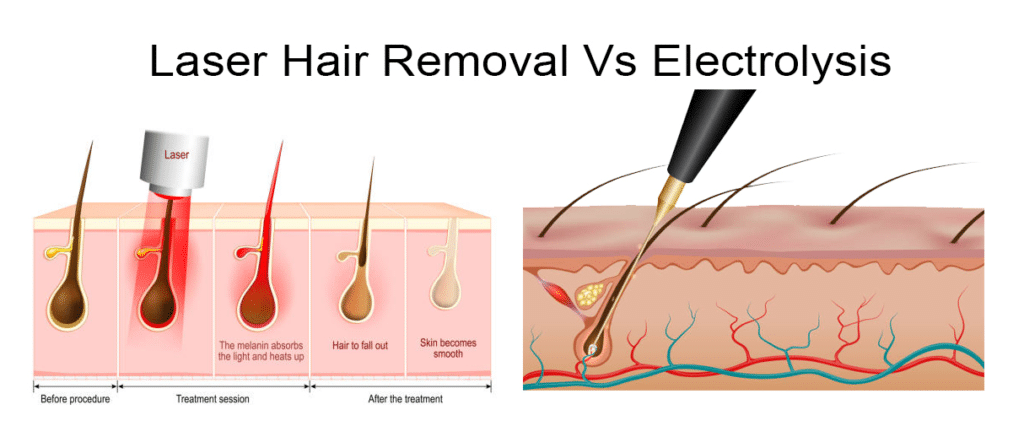
Laser hair removal uses concentrated light energy to target the pigment inside hair follicles. The laser heats the follicle and damages it, slowing down future hair growth. Over several sessions, hair becomes finer, lighter, and less visible.
Modern laser systems can treat large areas quickly, including the legs, back, chest, underarms, face, bikini area, and arms. The treatment works best on people with dark hair because the laser targets melanin inside the follicle.
Unlike shaving or waxing, laser treatment focuses on reducing hair growth long-term instead of temporarily removing hair from the skin surface.
How Laser Hair Removal Works
During treatment, the laser device sends pulses of light into the skin. The pigment in the hair absorbs the light energy, converting it into heat. This heat damages the follicle and reduces its ability to regrow hair.
Hair grows in cycles, so multiple sessions are needed because the laser only works effectively on actively growing hair. Most people need between 6 and 10 sessions for a visible long-term reduction.
Benefits of Laser Hair Removal
Laser hair removal has become one of the most popular cosmetic treatments because it offers several advantages:
- Fast treatment sessions
- Long-term hair reduction
- Minimal downtime
- Less ingrown hair
- Smoother skin texture
- Reduced shaving irritation
- Suitable for large treatment areas
Many people also notice improvements in skin texture, razor bumps, and folliculitis after completing sessions.
What Is Electrolysis Hair Removal?
Electrolysis hair removal is the only FDA-recognised method for permanent hair removal. Instead of using light energy, electrolysis uses a tiny probe inserted into each individual hair follicle. A small electrical current destroys the follicle and prevents future hair growth.
Unlike laser treatment, electrolysis works on all hair colours, including blonde, grey, white, and red hair. It also works on all skin tones.
Electrolysis treats one follicle at a time, making it more precise but slower compared to laser hair removal.
How Electrolysis Works
A trained electrologist inserts a fine, sterile probe into the natural opening of the hair follicle. Electrical energy then destroys the follicle’s growth centre. The treated hair gets removed with tweezers.
Because each follicle requires individual treatment, electrolysis sessions can take longer, especially for larger body areas.
Benefits of Electrolysis Hair Removal
Electrolysis provides several long-term benefits for people wanting permanent results:
- Permanent hair removal
- Works on all skin tones
- Effective for all hair colours
- Precise treatment for small areas
- Ideal for hormonal facial hair
- Helpful for stubborn individual hairs
People with PCOS-related facial hair, light-coloured hair, or hormonal hair growth often choose electrolysis because lasers may not effectively target lighter hairs.
Electrolysis vs Laser for Hair Removal: Key Differences
Although both treatments reduce unwanted hair, they differ in technology, speed, pain levels, and results.
| Feature | Laser Hair Removal | Electrolysis |
| Technology | Light energy | Electrical current |
| Hair Types | Best for dark hair | Works on all hair colours |
| Skin Types | Most skin tones with modern lasers | All skin tones |
| Treatment Speed | Fast | Slow |
| Large Areas | Excellent | Time-consuming |
| Small Areas | Good | Excellent |
| Pain Level | Mild snapping sensation | Slight stinging |
| Sessions Needed | 6–10 average | Multiple sessions over months |
| Results | Long-term hair reduction | Permanent hair removal |
| Cost | Lower for large areas | Higher over time |
Which Hair Removal Method Is More Permanent?
One of the biggest questions people ask is whether laser or electrolysis gives permanent results.
Laser Hair Removal Results
Laser treatment significantly reduces hair growth, but some hair may eventually regrow due to hormonal changes, age, or genetics. Maintenance sessions every year or two may be needed.
Most people experience:
- 70–90% hair reduction
- Finer regrowth
- Slower hair growth
- Softer hair texture
Electrolysis Results
Electrolysis permanently destroys individual follicles. Once a follicle gets fully treated, it cannot produce new hair.
However, multiple sessions are still required because hair grows in different cycles. New dormant follicles may also activate over time.
For people wanting complete permanent removal, electrolysis remains the gold standard.
Which Treatment Hurts More?
Pain levels vary depending on the body area, skin sensitivity, and personal tolerance.
Laser Hair Removal Pain
Many people describe laser hair removal as feeling like a rubber band snapping against the skin. Modern cooling systems make the treatment more comfortable than older devices.
Sensitive areas such as the bikini line or upper lip may feel stronger sensations.
Electrolysis Pain
Electrolysis can feel more uncomfortable because each follicle gets treated individually. Some people experience a stinging or heat sensation during treatment.
Topical numbing creams often help reduce discomfort for both procedures.
Which Option Is Better for Different Skin Types?
Technology improvements now allow laser treatments for a wider range of skin tones. However, the type of laser used matters greatly.
Best Candidates for Laser Hair Removal
Laser works best for the following:
- Dark hair
- Coarse hair
- Light to medium skin tones
- Large body areas
Advanced systems such as Nd: YAG lasers can safely treat darker skin tones with lower risks of pigmentation problems.
Best Candidates for Electrolysis
Electrolysis works well for:
- Blonde hair
- Grey hair
- White hair
- Red hair
- Hormonal facial hair
- Sensitive skin
- Small treatment areas
People with tattoos near the treatment area may also prefer electrolysis because lasers cannot safely treat over tattoo ink.
Electrolysis vs Laser: Cost Comparison
Cost depends on the treatment area, clinic expertise, location, and number of sessions needed.
Laser Hair Removal Costs
Laser treatment often costs less overall for larger areas because sessions are faster.
Average areas treated include:
- Legs
- Back
- Chest
- Bikini area
- Underarms
Although multiple sessions are required, treatment time remains relatively short.
Electrolysis Costs
Electrolysis sessions are usually charged by time rather than body area. Because every follicle receives individual treatment, total costs may become higher over time.
Small facial areas usually remain affordable, but large areas such as legs or backs can become expensive and time-intensive.
Side Effects and Safety
Both treatments are generally safe when performed by qualified professionals.
Laser Hair Removal Side Effects
Temporary side effects may include:
- Redness
- Mild swelling
- Skin sensitivity
- Temporary pigmentation changes
Serious complications remain rare when trained professionals use proper settings.
Electrolysis Side Effects
Possible temporary effects include:
- Redness
- Tiny scabs
- Mild swelling
- Skin tenderness
Poor technique may increase the risk of scarring, which is why choosing an experienced electrologist matters greatly.
Which Areas Can Be Treated?
Laser Hair Removal Areas
Laser treatment works well for larger areas, including the following:
- Legs
- Arms
- Chest
- Back
- Underarms
- Bikini line
- Neck
The speed of laser treatment makes full-body sessions much easier.
Electrolysis Treatment Areas
Electrolysis is ideal for smaller or precise areas such as:
- Chin
- Upper lip
- Eyebrows
- Nipples
- Small facial patches
It also works well for removing stubborn leftover hairs after laser treatments.
Can You Combine Laser and Electrolysis?
Yes. Many people combine both methods for the best long-term outcome.
A common strategy includes:
- Laser hair removal for bulk hair reduction
- Electrolysis for remaining lighter or stubborn hairs
This combination often reduces overall treatment time while achieving smoother permanent results.
How To Prepare for Hair Removal Treatments
Preparation helps improve treatment effectiveness and reduces irritation.
Before Laser Hair Removal
- Avoid sun exposure
- Shave the area before treatment
- Stop waxing or plucking beforehand
- Avoid fake tan products
- Follow the clinic skincare instructions
Before Electrolysis
- Hydrate well
- Avoid caffeine before sessions
- Keep skin clean
- Avoid tweezing between treatments
Following professional aftercare instructions also supports faster healing and better results.
Electrolysis vs Laser for Facial Hair
Facial hair removal requires careful consideration because the skin is delicate and hormonal changes affect regrowth.
Laser for Facial Hair
A laser can quickly reduce dark facial hair on areas like:
- Chin
- Sideburns
- Neck
- Upper lip
However, hormonal hair growth may require maintenance treatments.
Electrolysis for Facial Hair
Electrolysis remains extremely effective for:
- Hormonal hair
- White facial hair
- Blonde upper lip hair
- Individual stubborn hairs
Many people with PCOS, menopause-related hair growth, or hormonal imbalance prefer electrolysis for permanent facial hair removal.
How Long Do Results Last?
Laser Results Timeline
Most people see a noticeable reduction after 2–3 sessions. Final results appear after completing the recommended treatment course.
Maintenance may occasionally be needed.
Electrolysis Results Timeline
Electrolysis works gradually because follicles get treated individually during active growth phases. Full clearance may take months or longer, depending on hair density.
The final results are permanent once follicles are fully destroyed.
Choosing the Right Hair Removal Treatment
The best option depends on your goals, hair type, budget, and patience level.
Choose laser hair removal if you want:
- Faster sessions
- Large-area treatment
- Long-term reduction
- Less overall treatment time
Choose electrolysis if you want:
- Permanent removal
- Treatment for light-coloured hair
- Precision work
- Facial hair removal
A professional consultation helps determine the safest and most effective approach for your skin and hair type.
Final Thoughts on Electrolysis vs Laser for Hair Removal
Both electrolysis and laser hair removal offer excellent long-term solutions for unwanted hair. Laser treatment provides fast and effective reduction for large areas, while electrolysis delivers true permanent removal for all hair colours and skin types.
Understanding the differences between these treatments helps you make a confident decision based on your personal goals. Whether you want smoother legs, a hair-free bikini line, or permanent facial hair removal, choosing the right professional treatment can save time, reduce irritation, and improve confidence.
Investing in professional hair removal often means fewer ingrown hairs, smoother skin, and freedom from constant shaving or waxing routines.





