Threading your upper lip every three weeks. Reaching for the razor before a morning meeting. Booking yet another waxing appointment you know won’t last. For anyone dealing with unwanted facial hair, the cycle of temporary solutions feels endless and expensive. Laser hair removal on the face offers a clinically proven route out of that cycle, but only when you go into it with accurate, honest information about what the process actually involves.
This guide is written by the team at Lazer Lounge, Derbyshire’s leading laser hair removal clinic and an award-winning provider of advanced skin treatments across the East Midlands. Our aim is straightforward: give you everything you need to decide whether laser hair removal face treatments are right for you, what they realistically cost, how many sessions to plan for, and what separates a clinic worth trusting from one worth avoiding.
Which facial areas can be treated, and which cannot
Common treatment zones
The most frequently treated areas in UK clinics are the upper lip, chin, jawline, sideburns, cheeks, forehead, and neck. All of these are viable treatment zones for both women and men. The full beard line in men requires a more tailored approach due to hair density, and sessions for that area will typically be longer, but it is absolutely within scope for a qualified technician using the right laser system.
Hair types that respond well, and those that don’t
The laser works by targeting melanin, the pigment in the hair shaft. Dark, coarse hair absorbs laser energy most effectively, which is why clients with dark brown or black facial hair tend to see the fastest, most dramatic results. Vellus hair (fine, near-invisible “peach fuzz”), and hair that is grey, white, or very light blonde, simply does not contain enough pigment for any laser to target reliably. For those hair types, electrolysis remains the more appropriate route. A reputable clinic will tell you this upfront during your consultation rather than take your money and underdeliver.
There are areas that cannot be safely treated at all. Laser must never be used directly on or around the eyelids or eyebrows due to the serious risk of eye injury. Internal nasal hair is similarly off-limits. Areas near the eyes can be treated with the correct protective equipment and stringent safety protocols, but this demands proper clinical oversight.
How many sessions does laser hair removal on the face actually take?
Why the face needs more sessions than the body
Facial hair is heavily influenced by hormones and follows a faster, more erratic growth cycle than body hair. This is why the face typically requires 8 to 10 sessions rather than the 6 to 8 often cited for legs or underarms. Upper lip and chin laser removal, particularly for those living with PCOS or other hormonal conditions, often sits at the higher end of that range. Sessions are spaced 4 to 6 weeks apart to catch each hair follicle during its active growth phase.
What results look like at each stage
Results accumulate gradually, so knowing what to expect at each stage helps you stay patient with the process. After your first session, expect around 10 to 25% reduction, with shedding beginning 7 to 21 days later. By sessions four to six, most clients are seeing around 80 to 85% reduction. A full course of 8 to 10 sessions delivers 80 to 95% long-term hair reduction, with remaining hair noticeably finer, lighter, and slower to return.
Maintenance and long-term expectations
Facial laser treatment provides permanent hair reduction, not total permanent removal. Most clients find they need 1 to 2 top-up sessions per year for the first few years to maintain results. Even with the typical 10 to 20% regrowth that can occur over subsequent years, that hair is so much finer and lighter that most people stop thinking about it between appointments. That shift, from daily management to the occasional top-up, reflects what facial hair reduction laser genuinely delivers in practice.
Laser types and skin tone: choosing the right technology
Diode and alexandrite lasers for fair to medium skin
The alexandrite laser at 755 nm is widely considered the gold standard for fair to olive skin (Fitzpatrick Types I to III) and works particularly well on finer facial hair. The diode laser at 800 to 810 nm performs excellently on medium skin tones (Types II to IV) with coarser facial hair, offering a strong balance of power and safety. At Lazer Lounge, we use the Primelase HR Diode Laser, one of the most powerful diode systems available, capable of treating a broad range of skin and hair types with clinical precision. When comparing clinics, ask specifically what laser system they use and whether it is appropriate for your skin tone.
Nd:YAG for darker skin tones
For medium-brown to dark skin (Fitzpatrick Types IV to VI), the Nd:YAG at 1064 nm is the safest option for facial laser hair removal. Its longer wavelength penetrates past the surface layer of melanin to reach the hair follicle directly, significantly reducing the risk of burns or pigmentation changes. Any clinic treating darker skin tones should be using Nd:YAG or a system specifically validated for melanin-rich skin. If a clinic cannot tell you which laser they are using, that is a red flag.
Why IPL is not the same as laser
IPL (Intense Pulsed Light) is technically not a laser. It emits a broad spectrum of light rather than a single focused wavelength, making it less precise and generally less effective than a dedicated laser system for face laser treatment. IPL can produce results on very pale skin with fine hair, but it carries a meaningfully higher risk of burns on darker skin and struggles to match the performance of a properly calibrated diode or Nd:YAG. When researching clinics, always ask whether the device is a laser or an IPL machine: the distinction matters.
What to expect before, during, and after each session
Preparing your skin correctly
In the 2 to 4 weeks before a session, avoid direct sun exposure, tanning beds, and self-tanners, and apply SPF 30+ daily. In the week before, pause retinoids, exfoliating acids (AHAs and BHAs), and vitamin C serums. These steps are not optional guidelines. They directly affect your safety and the quality of your results.
On the day itself, arrive with completely clean, product-free skin: no makeup, no moisturiser, no SPF. Avoid alcohol and intense exercise in the 24 to 48 hours prior.
The treatment itself and what to expect immediately after
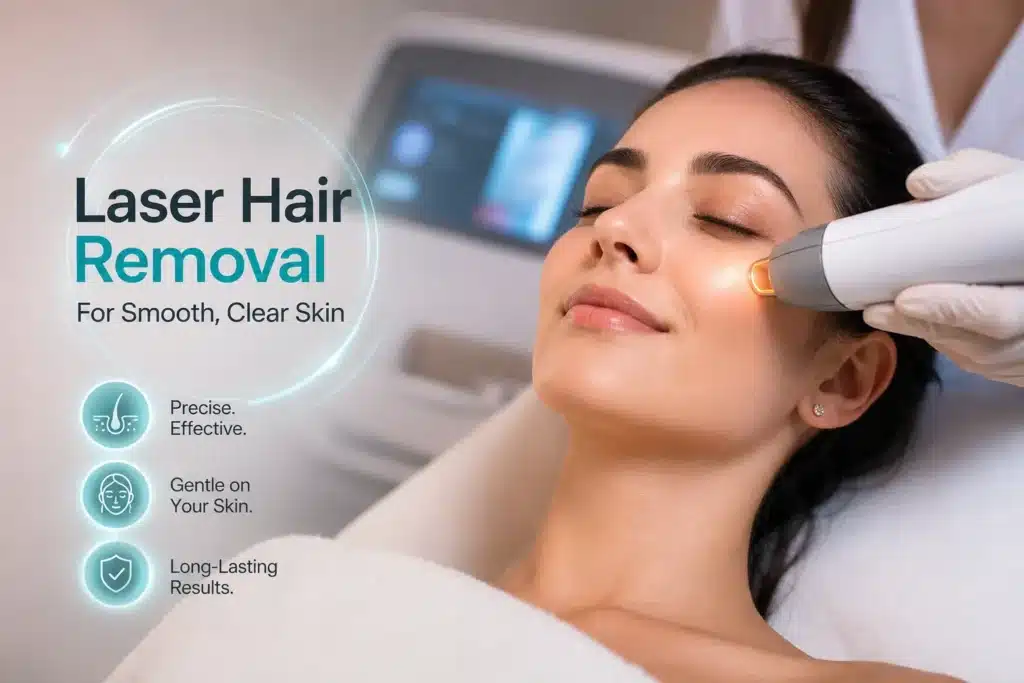
A facial laser session is typically short, often 10 to 20 minutes for targeted areas like the upper lip and chin. The pulses feel like a quick snap of heat, with cooling applied simultaneously on advanced systems. Immediately after, expect some redness and slight swelling around the follicles. These reactions are entirely normal and typically resolve within 24 to 72 hours, with most clients returning to their usual activities the same day.
Aftercare that protects your results
For 48 hours following treatment, avoid heat: no hot showers, saunas, or intense exercise. Use only gentle, fragrance-free products; aloe vera gel and ceramide-based moisturisers are ideal. Avoid all actives, including retinoids and acids, for at least a week. Sun exposure is the single biggest driver of post-treatment hyperpigmentation, so keeping the treated area out of direct sunlight and applying SPF 30+ daily once the skin has settled is non-negotiable.
Laser hair removal on the face vs threading and waxing
The cost comparison over time
Threading and waxing carry a lower per-session cost, but the cumulative spend tells a different story. A single upper lip thread every three weeks at £8 to £15 adds up to £140 to £260 per year, and delivers no lasting reduction whatsoever. A 6-session upper lip laser course in the UK typically ranges from £120 to £324. Over three to five years, with only occasional top-ups required, laser hair removal on the face works out considerably cheaper than keeping up with monthly appointments indefinitely. Most clients reach their break-even point within two to three years.
The case beyond cost
Threading and waxing remove hair from the root but do nothing to weaken the follicle over time. Repeated trauma to the delicate skin around the upper lip can cause ingrown hairs, irritation, and long-term sensitivity. Laser targets the follicle itself, progressively reducing both hair density and regrowth speed with every session. For anyone managing hormonal facial hair, this cumulative reduction is the most clinically meaningful difference between the two approaches. The hair does not just go temporarily, it gradually stops growing back.
What to look for before booking laser hair removal face treatments
Questions worth asking any clinic
Before committing to a course, ask the clinic which laser system they use and whether it is appropriate for your specific skin tone. Confirm that the practitioner is qualified and insured to perform the treatment. Check whether a patch test is carried out before treatment begins, as this is non-negotiable for facial work. Ask how they manage adverse reactions and whether aftercare guidance is provided in writing. A clinic that welcomes these questions and answers them clearly is one worth trusting.
- What laser technology is used, and is it appropriate for your Fitzpatrick skin type?
- Is a patch test performed before the first session?
- Are practitioners fully qualified and insured for laser procedures?
- What is the protocol if aside effect or adverse reaction occurs?
- Is a free consultation included before any commitment is made?
Why a free consultation matters more than the price
The cheapest course is rarely the best value when it comes to your face. A thorough clinical consultation allows the practitioner to assess your skin using the Fitzpatrick scale, review any hormonal or medical factors that might affect your results, and set realistic expectations for the number of sessions you will need. At Lazer Lounge, every client receives a free consultation and patch test before facial laser treatment begins. That initial appointment is where trust is built, clinical questions get answered honestly, and you leave with a treatment plan that is actually designed around your skin.
Is laser hair removal on the face right for you?
Laser hair removal face treatments are a proven, effective route to long-term hair reduction, but they work best when you go in with clear expectations and the right clinical support behind you. Confirm the areas you want to treat, understand that 8 to 10 sessions is a realistic commitment for most facial hair concerns, and choose a clinic equipped with the right technology for your skin tone. Those three steps do most of the work before you even walk through the door.
If you are searching for laser hair removal near you in Derbyshire or Nottingham, Lazer Lounge offers a free, no-obligation consultation as your starting point. It is an honest conversation about your skin, your goals, and what upper lip and chin laser removal, or any other facial area, can realistically achieve for you. Book yours today and find out exactly where you stand.
FAQ Section
1. Is laser hair removal safe for the face?
Yes. Laser hair removal is considered safe for facial treatments when performed by a qualified practitioner using medical-grade equipment. A consultation and patch test should always be carried out before treatment to determine the safest settings for your skin type and hair colour. The treatment should never be performed directly on the eyelids or eyebrows due to the risk of eye injury.
2. How many sessions of facial laser hair removal will I need?
Most people require 8–10 sessions for facial hair because facial hair is influenced by hormones and has a faster growth cycle than body hair. Clients with hormonal conditions such as PCOS may require additional sessions and occasional maintenance treatments to maintain their results.
3. Does laser hair removal work on all facial hair?
Laser hair removal works best on dark brown and black hair because the laser targets melanin within the hair follicle. Blonde, grey, white, and very light red hairs contain too little pigment for the laser to work effectively. During your consultation, a reputable clinic will assess whether your hair is suitable for treatment.
4. Does facial laser hair removal hurt?
Most clients describe the sensation as a quick snap against the skin or a mild warming feeling. Modern diode laser systems with built-in cooling technology make treatment far more comfortable than older laser devices. Areas such as the upper lip may feel slightly more sensitive, but the discomfort is generally brief and well tolerated.
5. How much does laser hair removal on the face cost in the UK?
Prices vary depending on the treatment area and clinic, but typical UK costs are:
- Upper lip: £30–£65 per session
- Chin: £35–£70 per session
- Upper lip and chin combined: £60–£100 per session
- Full face: £80–£180 per session
Many clinics offer discounted treatment packages, reducing the overall cost of a full course.
6. Is facial laser hair removal permanent?
Laser hair removal provides long-term hair reduction, not guaranteed permanent removal of every hair. Most clients experience an 80–95% reduction after completing a full course of treatment, with any remaining hairs growing back finer, lighter, and much more slowly. Occasional maintenance sessions may be required.
7. Can laser hair removal treat PCOS facial hair?
Yes. Laser hair removal is one of the most effective ways to manage unwanted facial hair caused by PCOS. However, because hormonal fluctuations can stimulate new hair growth, clients with PCOS often require additional sessions and periodic maintenance treatments compared with other clients.
8. What should I do before my facial laser hair removal appointment?
Before treatment you should:
- Shave the treatment area 12–24 hours beforehand (unless advised otherwise).
- Avoid waxing, threading, or plucking for at least four weeks.
- Stay out of the sun and avoid tanning.
- Stop using retinol, exfoliating acids, and other active skincare products several days before treatment.
- Arrive with clean skin that is free from makeup, moisturiser, and SPF.
Following these steps helps improve treatment safety and effectiveness.
9. What should I avoid after facial laser hair removal?
For the first 48 hours after treatment, avoid:
- Direct sun exposure
- Hot baths, saunas, and steam rooms
- Intense exercise
- Exfoliating products
- Retinol and acid-based skincare
- Waxing or plucking treated hairs
Apply SPF daily, keep the skin moisturised, and follow your clinic’s aftercare instructions to protect your results.
10. How do I choose the best clinic for facial laser hair removal?
Choose a clinic that uses medical-grade laser technology, carries out a full consultation and patch test, and employs qualified, experienced practitioners. Ask what type of laser they use, whether it is suitable for your skin type, what qualifications the therapist holds, and whether aftercare support is included. Reading genuine client reviews and checking before-and-after results can also help you make an informed decision.