

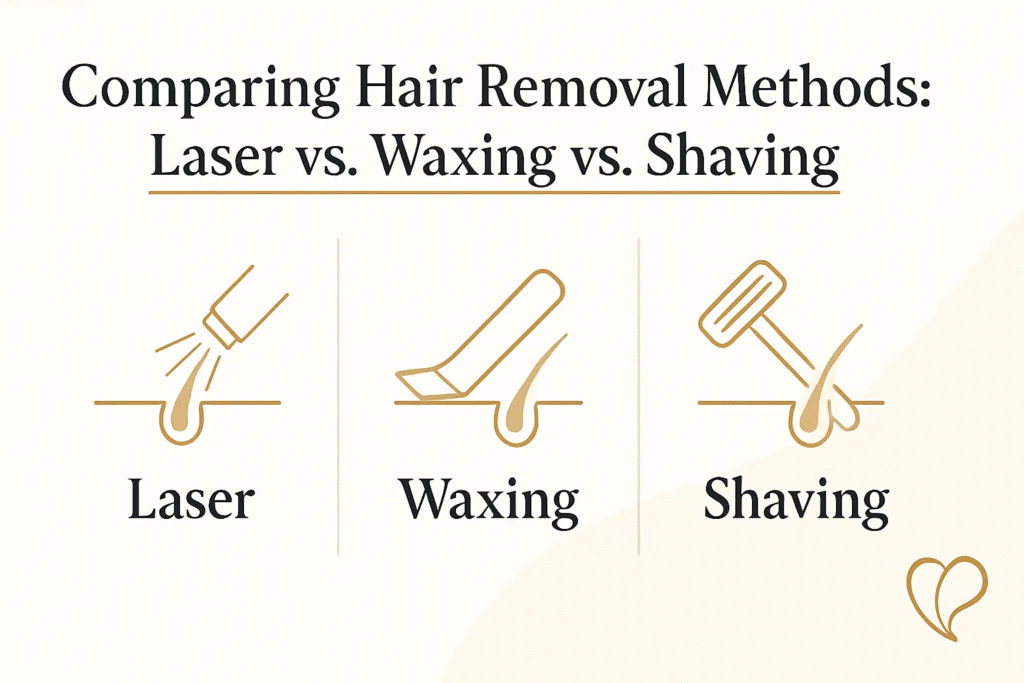
Unwanted hair removal has become a regular part of many people’s beauty and grooming routines. Some prefer the quick convenience of shaving, while others choose waxing for longer-lasting smoothness. Then there’s laser hair removal, the modern treatment that promises long-term reduction and freedom from constant maintenance.
But which option actually delivers the best results? The answer depends on your skin type, pain tolerance, budget, lifestyle, and long-term goals. Understanding the pros and cons of each method can help you make the smartest choice for your skin and confidence.
This guide compares laser hair removal, waxing, and shaving in detail, including costs, pain levels, effectiveness, side effects, and long-term results.
Understanding The Main Hair Removal Methods
Hair removal methods work differently. Some remove hair from the surface, while others target the root. This affects how long the results last and how your skin reacts afterwards.
Shaving Removes Hair From The Surface
Shaving cuts hair at skin level using a razor. It is fast, affordable, and easy to do at home. Many people choose shaving because it is painless and convenient for daily routines.
However, hair grows back quickly because the root stays intact. Most people notice stubble within one or two days. Frequent shaving may also lead to razor burn, skin irritation, and ingrown hairs, especially on sensitive skin.
Waxing Pulls Hair From The Root
Waxing removes hair directly from the follicle. Warm or cold wax sticks to the hair and pulls it out from the root. Because the root is removed, results last much longer than shaving.
Waxing can leave skin smooth for several weeks, but the process can feel painful. Some people also experience redness, bumps, or irritation after treatment. Repeated waxing may weaken hair growth over time, but it usually does not stop regrowth permanently.
Laser Hair Removal Targets The Hair Follicle
Laser hair removal uses concentrated light energy to damage hair follicles and reduce future growth. The laser targets pigment in the hair, making it one of the most effective solutions for long-term hair reduction.
Unlike shaving or waxing, laser treatments can significantly reduce the amount of hair that grows back. Many people notice smoother skin, fewer ingrown hairs, and thinner regrowth after several sessions.
Comparing Results – Which Method Lasts Longer?
Longevity matters when choosing a hair removal method. Nobody wants to spend hours removing hair every few days.
Shaving Offers The Shortest Results
Shaving gives immediate smoothness, but results fade quickly. Hair usually grows back within 24 to 72 hours. Since the hair is cut bluntly at the surface, regrowth can feel rough and prickly.
People with fast-growing hair often need to shave multiple times per week to maintain smooth skin.
Waxing Keeps Skin Smooth For Weeks
Waxing removes the root, so regrowth takes longer. Most people enjoy smooth skin for three to six weeks depending on their hair cycle.
Hair often grows back softer than after shaving. However, regular appointments are needed to maintain results, and hair must grow to a certain length before the next wax.
Laser Hair Removal Delivers Long-Term Reduction
Laser treatments provide the most long-lasting results. After a course of sessions, many people experience a dramatic reduction in hair growth.
Hair that does grow back often appears finer, lighter, and slower-growing. Occasional maintenance sessions may still be needed, but laser offers far more freedom than constant shaving or waxing.
Pain Levels – Which Hair Removal Method Hurts The Most?
Pain tolerance plays a major role in choosing the right method.
Shaving Is Usually Painless
Shaving causes little to no pain when done correctly. However, cuts, razor burns, and irritation can happen if the skin is dry or sensitive. Using shaving cream and a sharp razor helps reduce discomfort.
Waxing Can Feel Intense
Waxing pulls multiple hairs out at once, which can feel painful, especially in sensitive areas like the bikini line or underarms. The discomfort is temporary but noticeable.
People with sensitive skin may also experience redness or tenderness for several hours after treatment.
Laser Hair Removal Feels Like Small Snaps
Most people describe laser hair removal as a snapping or tingling sensation against the skin. Modern laser systems often include cooling technology to improve comfort during treatment.
The discomfort level is generally lower than waxing for many clients, especially after repeated sessions when hair becomes thinner.
Cost Comparison – Which Option Saves More Money?
The price difference between these methods can be surprising over time.
| Hair Removal Method | Upfront Cost | Long-Term Cost | Maintenance |
| Shaving | Low | High over time | Frequent |
| Waxing | Moderate | Moderate to high | Every few weeks |
| Laser Hair Removal | Higher initially | Lower long-term | Occasional touch-ups |
Shaving Looks Cheap At First
Razors and shaving creams are inexpensive initially. However, the costs continue for years because shaving never reduces hair growth permanently.
Waxing Requires Ongoing Appointments
Professional waxing sessions can become costly over time. Since treatments are needed regularly, the yearly expense can add up quickly.
Laser Hair Removal Becomes Cost-Effective
Laser hair removal has a higher starting price, but it can save money in the long run. Fewer appointments and reduced regrowth mean lower maintenance costs over time.
Skin Health And Side Effects
Hair removal affects skin differently depending on the technique used.
Shaving May Cause Razor Burn And Ingrown Hairs
Frequent shaving can damage the skin barrier. Many people experience razor bumps, cuts, itchiness, or ingrown hairs. Sensitive skin types may struggle with ongoing irritation.
Waxing Can Trigger Redness And Sensitivity
Waxing exfoliates the skin along with removing hair. This may cause temporary redness or inflammation. Some individuals develop bumps or sensitivity after treatment.
Laser Hair Removal Helps Reduce Ingrown Hairs
One major benefit of laser treatment is smoother skin texture. Since the follicle becomes less active, ingrown hairs often decrease dramatically.
Many people choose laser treatments specifically to improve skin comfort and reduce recurring irritation.
Which Hair Removal Method Works Best For Different Skin Types?
Every skin type responds differently to hair removal.
Shaving Works For Most Skin Types
Shaving is suitable for nearly everyone, but people with curly or coarse hair may experience more ingrown hairs and irritation.
Waxing May Irritate Sensitive Skin
People with sensitive or acne-prone skin sometimes react badly to waxing. The pulling action can aggravate inflammation and redness.
Laser Technology Has Improved For More Skin Tones
Modern laser hair removal technology can safely treat a wider range of skin tones than older systems. Advanced lasers now offer safer and more effective results for darker complexions as well.
A professional consultation helps determine the best laser system for your skin and hair type.
Time And Convenience – Which Method Fits Busy Lifestyles?
Lifestyle matters when choosing a beauty routine.
Shaving Requires Constant Maintenance
Although shaving is quick, the need for frequent upkeep can become frustrating. Daily or every-other-day shaving takes time over the years.
Waxing Requires Planning
Hair must grow before waxing appointments, which means dealing with visible regrowth between sessions. Appointments also take time and require scheduling.
Laser Hair Removal Saves Time Long-Term
Laser sessions are relatively quick, especially for smaller areas like underarms or the upper lip. Once treatments are complete, most people spend far less time worrying about hair removal.
Environmental Impact Of Hair Removal Methods
Sustainability is becoming increasingly important in personal care choices.
Shaving Creates More Waste
Disposable razors, shaving cream cans, and packaging contribute to environmental waste over time.
Waxing Produces Product Waste
Wax strips, spatulas, gloves, and packaging also generate waste during repeated treatments.
Laser Hair Removal Creates Less Ongoing Waste
Because laser treatments reduce the need for continuous products and appointments, they may have a lower environmental impact in the long run.





