

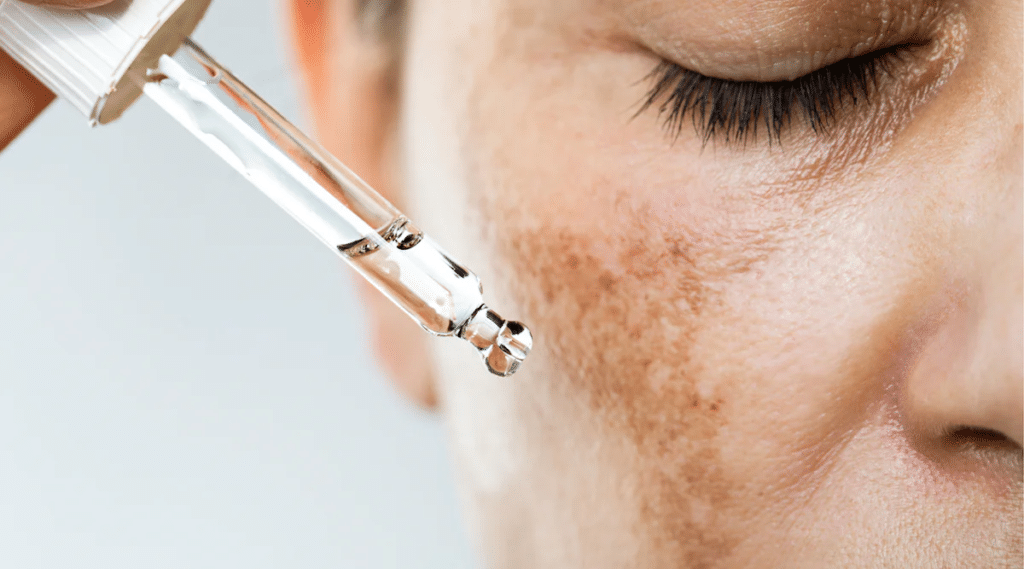
Tranexamic acid has emerged as one of the most effective and scientifically subsidised remedies for melasma and post-inflammatory hyperpigmentation (PIH). Over the previous few years, it has turned out to be the preferred pigment-modulating agent amongst dermatologists internationally, as it targets the foundational cause of pigmentation instead of just lightening the pores and skin floor.
Unlike conventional pigment inhibitors, tranexamic acid works at more than one range of the pigmentation pathway. It can be used topically, prescribed orally, or studied in injectable form, making it a versatile and relatively adaptable remedy for cursed pigmentation disorders.
Why Is Tranexamic Acid a Breakthrough Ingredient for Melasma?
Melasma is a chronic and relapsing situation driven by way of irritation, UV exposure, hormonal influence, and vascular elements. Tranexamic acid stands out because it interrupts the biochemical triggers that stimulate melanin production, rather than simply suppressing pigment temporarily.
Its reputation has surged as it treats melasma at its source. This is why many dermatologists now rank tranexamic acid as the primary agent of desire for coping with melasma and complicated pigmentary problems, especially in sufferers who fail to reply to hydroquinone or retinoids.
How Does Tranexamic Acid Work?
Tranexamic acid is classed as a depigmenting agent with anti-inflammatory properties. It interferes with the plasminogen–plasmin pathway, which performs a key position in UV-triggered pigmentation and melanocyte activation.
- By blocking this pathway, tranexamic acid:
- Reduces melanin synthesis
- Prevents melanocytes from migrating into superficial pores and skin layers
- Minimizes irritation-driven pigmentation
- Enhances the effectiveness of lasers, chemical peels, and other pigment correctors
This multi-pathway motion explains why it performs well when mixed with picosecond lasers, Cosmelan, Dermamelan, and tyrosinase inhibitors.
What Is Tranexamic Acid?
Tranexamic acid is available in 3 formulations:
- Topical serums and lotions – Most generally used, non-prescription
- Oral drugs – Prescription simplest, dermatologist-guided
- Intradermal injections – Research-based, no longer routinely encouraged
Topical formulations are extensively accessible, even as oral tranexamic acid calls for scientific supervision because of possible systemic risks.
How Long Does Tranexamic Acid Take to Work?
Visible development commonly occurs inside 3 to 8 weeks. Results are drastically quicker and extra consistent when tranexamic acid is mixed with:
- Picosecond laser treatments
- Medical-grade chemical peels
- Other pigment inhibitors
Melasma is a sluggish-responding situation, so persistence and consistency are crucial.
What Do Studies Say About Tranexamic Acid and Melasma?
Clinical studies show effectiveness costs ranging from 20% to 80%, depending on the system and mixture remedy.
- Topical serums show modest development
- Oral tranexamic acid, particularly whilst mixed with lasers and peels, demonstrates substantially better MASI rating discounts
- Systemic therapy consistently outperforms topical use on my own
This confirms that the delivery approach matters as much as the component itself.
Is Tranexamic Acid Suitable for All Skin Types?
Yes. acid is safe and properly tolerated across all skin kinds, such as darker pores and skin tones which might be prone to post-treatment hyperpigmentation.
Optimal topical concentrations range between 1.8% and a pair of %. Higher concentrations increase the chance of irritation, mainly in touchy skin.
Tablet vs Cream: Which Is Better?
The preference relies upon:
- Depth and severity of melasma
- Previous treatment history
- Patient expectations
- Individual hazard elements
For beginners, topical therapy should continually be attempted first. Needs to be best used under dermatologist’s supervision after a cautious danger-advantage evaluation.
How to Use Tranexamic Acid Topically
Start slowly to minimise irritation:
- Apply every second night initially
- Increase to nightly use as tolerated
- Stick to concentrations between 1.5% and 3%
- Moisturize 15–30 minutes before application
- Adjust frequency if using retinoids or acids
What If Skin Becomes Irritated?
If irritation occurs:
- Reduce frequency or concentration
- Use moisturizer after application
- Avoid combining with retinoids, AHAs, or vitamin C initially
- Patch test before full application
- Seek clinician guidance
Recommended Tranexamic Acid Brands
Effective formulations include:
- SkinCeuticals Discoloration Defense
- The Inkey List Tranexamic Acid
- Exaglow Serum
Well-formulated serums can perform comparably to hydroquinone and vitamin C when used correctly.
What If Serums Don’t Work?
This is common. In such cases, dermatologists may:
- Add additional pigment inhibitors
- Prescribe oral tranexamic acid
- Introduce picosecond lasers
- Recommend advanced chemical peels
Common Combination Ingredients
It is often combined with:
- Arbutin
- Azelaic acid
- Kojic acid
- Hydroquinone
- Vitamin C and E
- Salicylic acid
- Glycolic, mandelic, and lactic acids
- Botanical extracts like licorice and green tea
Careful titration is essential to avoid irritation.
How Long Can Tranexamic Acid Be Used?
There is no constant duration. Long-term protection data from gynaecology helps extended use under supervision. Many experts adopt rotational remedy to reduce resistance and recurrence.
Oral Tranexamic Acid Dosage
Typical dosing stages ranged from 500 mg to 2000 mg daily, depending on observed protocols. Lower doses may be similarly powerful with fewer side effects. Always comply with dermatologist guidance.
Safety in Pregnancy
Tranexamic acid is pregnancy class B; however, it crosses the placental barrier. Due to a lack of strong human statistics, most dermatologists keep away from prescribing it at some point of being pregnant or conception planning, specifically for a cosmetic circumstance like melasma.
Side Effects
Side effects are uncommon:
- Oral: mild GI upset, irregular cycles, extremely rare blood clots
- Topical: redness, dryness, stinging, irritation (dose-dependent)
How to Incorporate Tranexamic Acid into Your Routine
Morning
Gentle cleanser → Antioxidants → SPF 50+ with iron oxide
Evening
Cleanser → Tranexamic acid (weekdays)
Optional pigment correctors or retinoids on alternate nights
Expert Summary: Davin’s Viewpoint
It is one of the most effective gears in contemporary melasma treatment Derby; however, it’s regularly misunderstood due to competitive serum marketing. While topical formulations help, oral tranexamic acid mixed with lasers and pigment inhibitors provides the very best success charges, with reaction prices between 62% and 80%.
About 20% of patients continue to be resistant, highlighting the complex and multifactorial nature of melasma. Correct affected person selection, shipping technique, and aggregate therapy decide fulfilment.